

Paradise blessed with the greatest biodiversity in the world, inhabited by native communities that still keep their ancestral traditions alive and live in harmony with nature. This fascinating destination is surrounded by beautiful landscapes and exotic animals in the Peruvian Amazon. Becoming an ideal place for those who love nature and like an experiential tourism.
About the Manu National Park
The Manu National Park, a World Heritage Site, is one of the most biodiverse areas on the planet. It is located in the departments of Cusco (province of Paucartambo, district of Kosñipata) and Madre de Dios (province of Manu districts of Fitzcarrald and Manu), covering the entire Manu River basin.

Located in southern Peru, in the eastern sector of the Andes mountain range and the western edge of the Amazon basin, it is the only park in Latin America that includes the entire range of environments between tropical lowland rainforest to frigid punas, above 4,000 masl
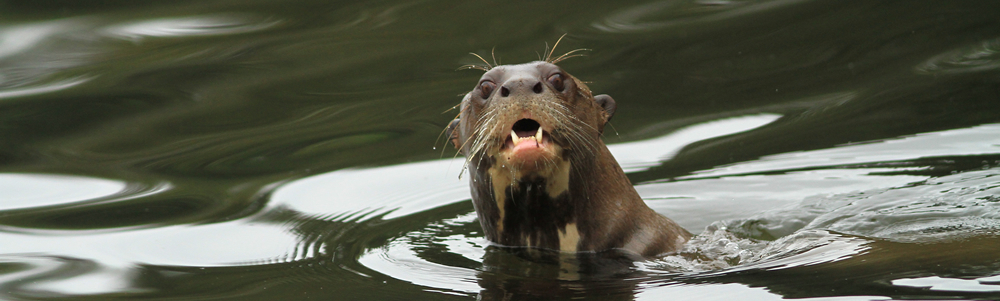
The Park was created on May 29, 1973, has an area of 1,716,295.22 hectares and is one of the best destinations for nature tourism. In the lower basin of the Manu River, the exuberance of the Amazonian plain stands out. There are up to five recommended areas for the tourist visit, with a high diversity of flora and fauna: Salvador, Otorongo, Juárez, Pakitza and Limonal. All navigable circuits in lakes or cochas, where river wolves and black lizard are appreciated.
One of the biggest attractions of the Park is the collpas, a habitat of flocks of guacays, as well as other species of fauna, which go in search of food. The Park is home to some 221 species of mammals, such as otorongo, black tiger, sachavaca, sajino, deer, ronsoco, black maquisapa, among others. As for birds, the harpy eagle, jabirú, pink spatula, jungle goose and cock of the rocks stand out.
Inside the Park is a metal tower 18 meters high and an elevated path with platform that facilitates the best bird watching and the immensity of the forest from the treetops.
For a spectacular view it is recommended to reach the Tres Cruces viewpoint and appreciate the sunrise, as well as two opposite landscapes: the Andean highlands and the cloud forest. It is better to go between May and August, when the sky is clear and allows you to see the sun appear twice during the same sunrise, due to a phenomenon of nature.

The Manu has one of the most renowned research centers for the Amazon: the Cocha Cashu biological station, as well as an interpretation center at the Limonal surveillance post.
Much of the Park is indigenous territory. Here 30 rural communities live that maintain the Quechua language as their mother tongue and several native Amazonian populations such as the Matsiguenka, Amahuaca, Yine, Amarakaeri, Huashipaire and Nahua peoples. In addition there are indigenous populations in voluntary isolation called uncontacted. The cultural richness of the place is also evident in archaeological sites that have not yet been studied.
Services Inside the Park: shelters, interpretation center, hygienic services, park rangers and radio.
Services Outside the Park: Boat and / or boat rental, police post, medical post.
Activities: bird watching, flora, fauna and landscape, hiking, camping, research studies, taking pictures and filming.
Observations: authorizations to enter Manu National Park for tourism are granted to the operating agencies, which in turn offer various services and packages within the park. It is not possible to enter freely. Photographing or filming costs 10% of the UIT.

 vertigotravelperu.travel.blog