
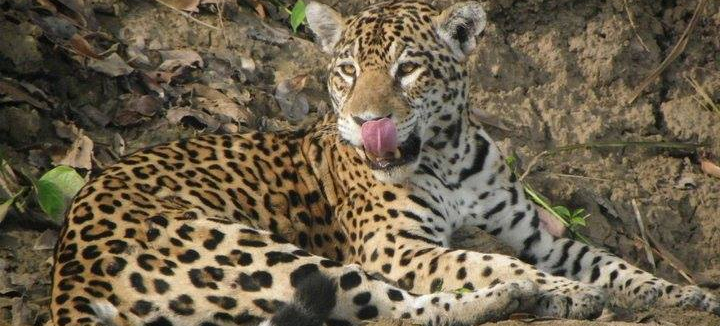
Among the natural wonders that the Manu National Park offers, a natural area protected by the State for 45 years and in 1987 declared a Natural World Heritage Site, its fauna stands out as one of its greatest exponents of otorongo or jaguar.

On this occasion, the National Service of Natural Areas Protected by the State (Sernanp) published some images that show the sighting of an otorongo standing on the trunk of a huge tree, near the Manu river. The otorongo is a species that is hardly seen for its solitary behavior and being in a vulnerable situation.
In the images you can see the feline who, when noticing the human presence that films him, shakes his head, moves slowly through the trunk and then enters the forest, obeying his instinct to avoid contact with people and ensure their survival.
The otorongo (panthera onca) is the largest feline in America and can measure up to 1 meter 80 centimeters long, of which 70 centimeters correspond to its tail. It has a height of 90 centimeters and weighs 180 kilos. Males are twice the size and weight of females and both feed on various vertebrates, including fish, turtles, rodents, alligators, and even tapirs. In general this species does not attack humans and only does so to defend itself against hunters who traffic in their prized fur.
The otorongo lives solitary in the humid forests and swampy areas of South and Central America, although some are also found in dry forests, such as the Cerros de Amotape National Park, in the Piura and Tumbes regions. It only meets with other specimens during the rutting season to reproduce.
Naturally, the otorongo usually lives between 11 and 15 years in its habitat, and from 15 to 20 years in conditions of captivity. The gestation of the females is from 93 to 110 days and they are born from 2 to 4 cubs that weigh between 700 and 900 grams. The offspring are totally dependent on their mother, so they stay with her for around two years.
The species is currently in a state of vulnerability and in a possible state of danger of extinction, if deforestation in tropical forests and indiscriminate hunting for fur trafficking are not reduced.
MANU TOURS INFORMATION

 vertigotravelperu.travel.blog