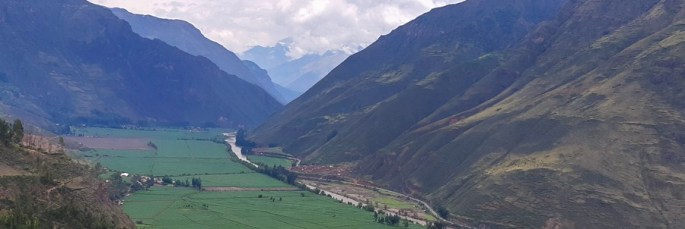
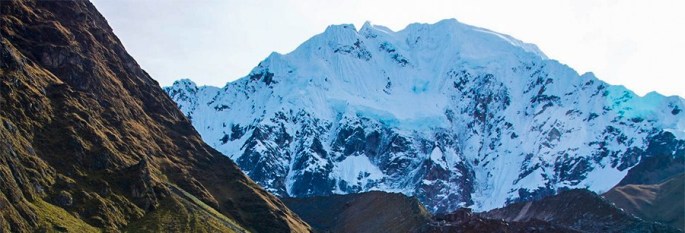
This Salkantay trek takes you around the stunning Mount Salkantay, which is the second largest mountain in Cusco region (6,277m / 20,577ft). On This Trek, you will enjoy the spectacular views of the snowcapped peaks such as: Salkantay Mountain and Humantay mountain range.
Etiqueta: cusco tour
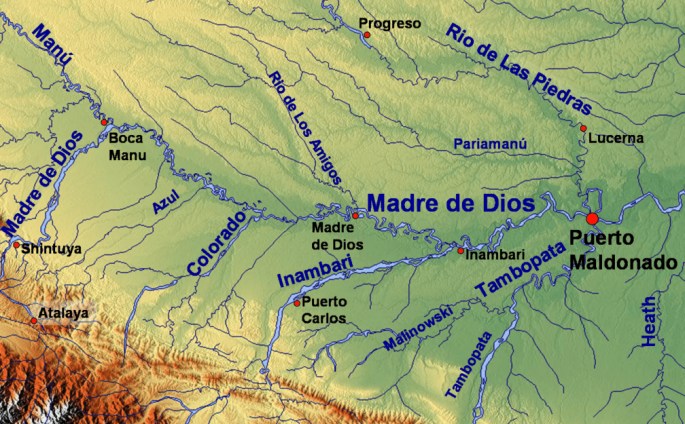
everything you need to know about the Manu River
The Manu River is the place of the highest biological concentrations on the planet, with 19,098 km2, which is why Unesco named it a World Heritage Site of the Biosphere Reserve for more than 40 years.
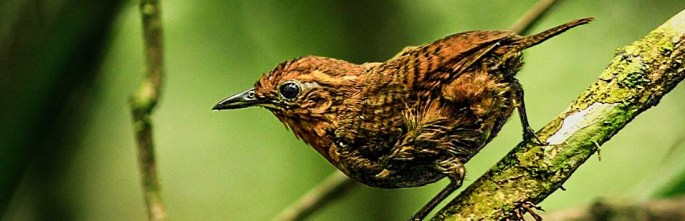
Manu, paradise for birdwatching
The Manu National Park is a protected natural space located in the southeast of Peru, located in the departments of Madre de Dios and Cusco, in the provinces of Manu and Paucartambo. With a territory of 1,532,806 hectares, it is divided into three large areas:
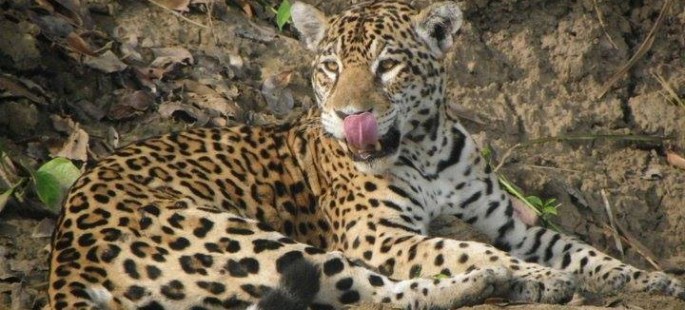
Sighting Otorongo in the Manu National Park
Among the natural wonders that the Manu National Park offers, a natural area protected by the State for 45 years and in 1987 declared a Natural World Heritage Site, its fauna stands out as one of its greatest exponents of otorongo or jaguar.
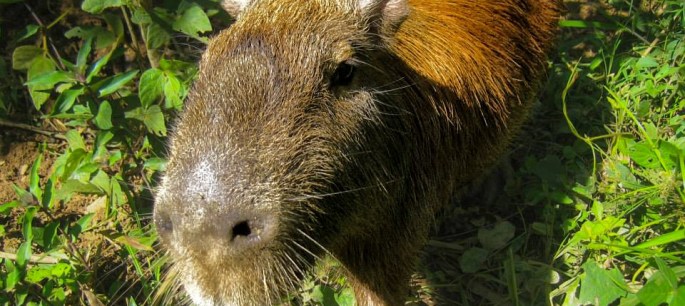
THE RONSOCON (Hydrochoerus hydrochaeris) the largest rodent in the world
The Ronsoco is the largest rodent, weighing from 35 to 66 kg and with a length of approximately 1.2 m. Females of this species are slightly larger than males. Its coat is thick and thin, and is reddish brown on most of the body,
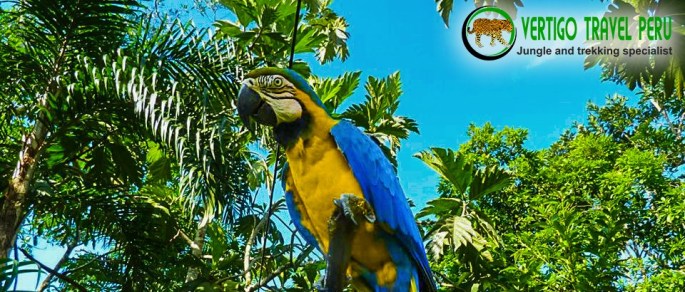
The yellow-blue macaw (Ara ararauna)
Also known as the blue-and-yellow macaw, yellow parrot, or yellow-billed paraba, is a species of psittaciform bird in the parrot family endemic to South America. MANU TOURS INFORMATION
Wildlife Observation on the Manu Tour
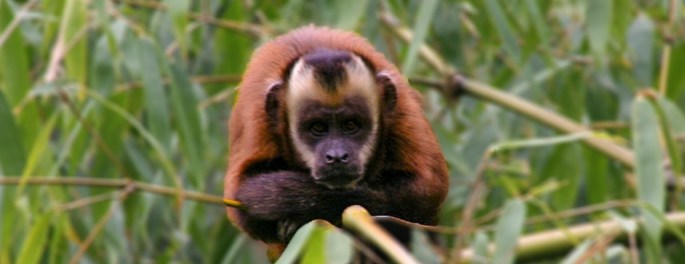
The PNM is home to a large number of wildlife species. There have been about 160 species of mammals, more than 1,000 species of birds (mostly residents), about 140 species of amphibians, 50 species of snakes, 40 lizards, 6 turtles, 3 alligators and 210 fish
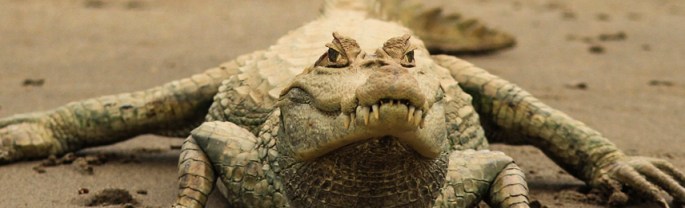
The White Cayman of Manu – Cusco – Peru
(Caiman Crocodilus) can be one of them, they usually sunbathe on the sand banks of the Manú River while some butterfly perches on their shoulders.
Manu National Park: Life Reserve
“When you study an animal or a plant, you see that there is no obstacle that will drive it back. Yes, there are predators, pests, but, without the intervention of man, everything comes to a balance. If we analyze this process and manage to reproduce it, can you
El Valle Sagrado para los incas
Con el río alimentando el valle, sus fértiles tierras fueron uno de los principales centros de producción de alimentos durante la época de los incas; algunos lugares incluso, como Moray, fueron utilizados como laboratorios agrícolas, para experimentar con especies de plantas traídas de todo el imperio. Los incas cultivaron, p